
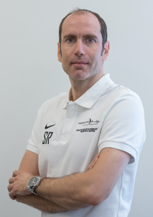
Sébastien Racinais, PhD
Research Engineer, The Institute Sports of Montpellier, France (CREPS)
Lecture in the congress: Thermal therapies for musculoskeletal injuries
Sébastien Racinais obtained his PhD in 2004 and has worked on the effect of hot climates for more than 20 years in the French West Indies, the Middle East and France. He is now a research engineer at the institute of sports of Montpellier, in France (CREPS). Prof Racinais has successfully guided numerous professional and national teams in developing environmental training. Sébastien is also collaborating with international sports federations on consensus guidelines relating to exercising in hot ambient conditions. After being the Chair of the IOC Adverse Weather Impact expert working group for the Olympic Games Tokyo 2020 and Paris 2024; and a member of the Medical and Scientific Commission Games Group for the protection of athlete’s health at those games, he is currently the chair of the IOC Environmental Stress Expert Group. He has published more than 200 research articles and book chapters, with a citation index (H-index) of 61. His research is currently developing heat therapy for muscle rehabilitation
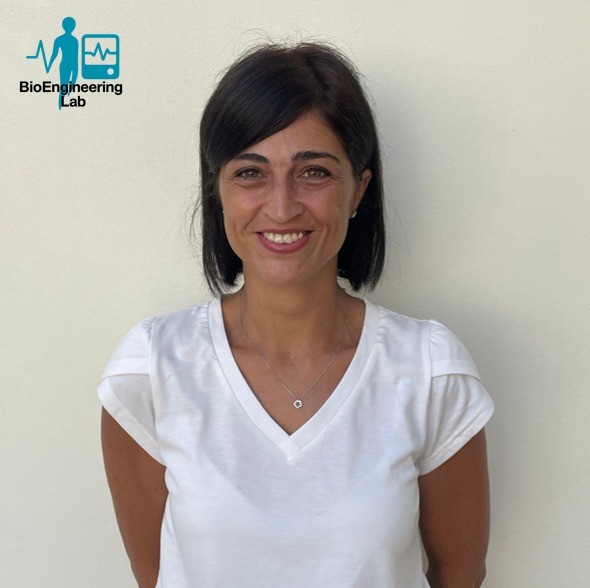
Daniela Cardone, PhD
Associate Professor of Biomedical Engineering at the University “G. d’Annunzio” of Chieti–Pescara, Italy
Lecture in the congress: Thermal Infrared Imaging in Human-Machine Interaction
Daniela Cardone is an Associate Professor of Biomedical Engineering at the University “G. d’Annunzio” of Chieti–Pescara, Italy. Her research focuses on biomedical signal and image processing, artificial intelligence, affective computing, and multimodal sensing for digital health applications. Her work includes the development of innovative methods based on infrared thermography, physiological signal analysis, and machine learning for the assessment of cognitive, emotional, and physiological states, with applications in healthcare, rehabilitation, and human–machine interaction.
She has authored more than 110 scientific publications in international journals and conference proceedings and has participated in several national and international research projects. She coordinated the AID2GAIT project, aimed at developing AI-driven biofeedback solutions to enhance paediatric robot-assisted gait rehabilitation. Her research combines interdisciplinary approaches spanning biomedical engineering, neuroscience, and artificial intelligence, with a strong emphasis on translational research and technology transfer

Professor Graham Machin FRS FREng, DSc, DPhil, BSc, HonInstMC, FIPM, FInstP, CEng, CPhys
Senior Fellow in Temperature measurement at the UK National Physical Laboratory, visiting Professor at Strathclyde University and Honorary Professor at both Glasgow and Birmingham Universities.
Lecture in the congress: The pros and cons of current non-contact thermometry techniques in medicine
Professor Machin is a world leading expert in temperature measurement. He graduated with first class honours BSc (Hons) from Birmingham University in Physics with Astrophysics, undertook DPhil research at Oxford University into cataclysmic variables and low mass X-ray binaries. Since joining the NPL Temperature Group he has performed and led research that has effected profound changes in the way temperature is realised, disseminated and measured. Selected examples include:
- Helped lead the global thermometry community to a successful kelvin redefinition in 2019 and continues to play a leading role in progressing the realisation of the redefined kelvin. More information can be found in the Phil Trans A open access focus edition: “The redefined kelvin: Progress and Prospects” https://doi.org/10.1063/5.0234456
- Led global activity in developing next generation high temperature standards resulting in step change improvements in thermocouple calibration, the development of high temperature self-validating thermocouples and, novel approaches to high temperature non-contact thermometry scale dissemination by indirect primary radiometry.
- Made leading contributions to developments in medical thermometry including; research to develop a device for preventing diabetic foot ulceration; applying thermometry expertise to improve fever screening and body temperature measurement, especially for triage applications, and helped found and was the first chair of the UK Body Temperature Measurement Group.
- Initiated research into next generation optically-based practical primary thermometers based on III-V semiconductor ring-resonators and small-scale Doppler Broadening Thermometry.
Graham has written more than 300 papers and given more than 100 keynote/invited addresses around the world. He is the UK representative on the International Committee of Weights and Measures (CIPM) Consultative Committee for Thermometry (CCT) where he chairs the Working Group for Non-Contact Thermometry. He is the past chair of the Euramet Technical Committee for Thermometry (2014-2018) and past President of the UK Institute of Measurement and Control (2018-2019).
Graham has received numerous awards for his work including; elected Fellow of the Royal Academy of Engineering (2019), awarded the Institute of Measurement of Control, premier annual medal, “Sir Harold Hartley”, “for outstanding contributions to the technology of measurement and control” (2021). In 2022 his group was awarded the InstMC “Cornish award” for the “group that has excelled in some dimension of scientific instrument making within industry, academia, national or international laboratories” and he was elected Fellow of the Royal Society (2025).